
Transitional Program Release Status
The St. Mary Parish Sheriff documents a Transitional Work Program associated with the Law Enforcement Center. It is a program and custody status for eligible people nearing a return to the community. Entry into the program should not be labeled a final release, parole discharge, or completed sentence. The person may still be accountable to the sheriff or Louisiana Department of Public Safety and Corrections even when daily activity takes place beyond a secure program setting.
Three events can look alike from the outside but produce different records. A placement moves a person into the program while the sentence continues. A physical release ends confinement at the St. Mary Parish facility but may begin parole, good-time supervision, or another condition. A discharge ends the sentence or supervision obligation recorded by the proper custodian. Check which event actually occurred before describing the person’s status.
| Event | What it means | Best confirmation |
|---|---|---|
| Program placement | A transition stage within an active custody or sentence framework | Sheriff or DPS&C program and custody record |
| Physical release | The person left confinement, possibly under supervision | Actual sheriff release time or DPS&C status |
| Transfer | Another facility or agency accepted custody | Movement destination and receiving locator |
| Discharge | The legal term or supervision ended | DPS&C, sheriff, or court record governing the sentence |
Confirm Transitional Program Release
Start with the agency that legally owns the sentence. A parish prisoner serving a local term is normally confirmed through the St. Mary Parish Sheriff. A DPS&C prisoner housed locally follows the state custody and release path. The center’s mixed population makes this distinction essential. A person can occupy the same St. Mary building as someone under a different authority and later appear in a different public system.
- Identify the person by full name and, when known, the parish booking number or DPS&C number.
- Check the sheriff’s Released filter for an actual local departure timestamp tied to the booking.
- Use the Louisiana DPS&C Imprisoned Person Locator when the person serves a state sentence or has moved to state custody.
- Call 337-836-9509 to ask whether the displayed event is program placement, physical release, or transfer.
- Request the movement or release record when the public screen does not state the destination or legal reason.
The sheriff’s rolling 48-hour release feed is affirmative evidence of a recent departure from the local facility. Absence from a current roster is weaker. A name may be missing because of timing, spelling, transfer, or a different legal custodian. The broader St. Mary Parish released-inmate search explains how to reconcile the parish, state, court, federal, and immigration paths.
Transitional work placement is not proof of release. Confirm an actual departure and the remaining sentence status with the legal custodian.
State Transitional Release Records
A state prisoner can be physically housed by the St. Mary Parish Sheriff while remaining under Louisiana DPS&C authority. For that person, a local roster event may document movement from Centerville, but the state record controls the later custody, projected date, parole, and supervision picture. The DPS&C locator page directs users to a 24-hour telephone locator at 225-383-4580 and can provide a projected release date when applicable.
Projected does not mean final. Sentence computation can change through earned credit, forfeited credit, court action, detainers, or new information. Parole eligibility is also different from release. A hearing or favorable decision does not establish that someone walked out on that date. Processing, conditions, plans, and holds can remain. Ask for the actual release or transfer date when the event has already happened.
The Louisiana DPS&C locator instructions show the official state route.
The state result applies to a DPS&C record. It should not be substituted for the parish custody record of a person serving only a local sentence.
Request Transitional Release Records
A narrow records request works better than an open-ended question. Give the full name, date of birth when appropriate, booking or DPS&C number, and the known program period. Ask for the existing record that identifies admission, placement into transitional work, actual release or transfer date and time, public movement code, releasing authority, and public destination. Ask the custodian to explain any code in plain terms if an existing key or description is available.
For a sheriff-held record, send the request to St. Mary Parish Sheriff’s Office, ATTN: Records, P.O. Box 571, Franklin, LA 70538. Louisiana public-record law permits access to existing public material, subject to exemptions. It does not require an office to create a new analysis. Ask for separable public portions if juvenile, medical, victim, security, sealed, or investigative material limits part of the response.
The sheriff publishes a $5 cost and 7 to 10 day availability for incident and traffic reports. Do not assume those terms apply to a transitional-program custody packet. Ask for the real reproduction charge and a production estimate before copies are made. For a state record, identify the DPS&C number, parish of conviction, and exact release or discharge fields sought in the request to the state custodian.
- Release
- Physical departure from confinement, sometimes with supervision still in force.
- Good time
- Statutory credit that can reduce time in physical custody for an eligible person.
- Parole
- Conditional community release before the sentence has fully ended.
- Discharge
- The recorded end of a sentence or supervision obligation.
St. Mary Transitional Custody
The local program sits within a broader facility system that the sheriff describes as jurisdictionally mixed. The Law Enforcement Center can hold parish detainees, DPS&C prisoners, and people for municipal or tribal agencies. That fact is the key local safeguard against a false release claim. Leaving one program or building does not reveal whether the person entered the community or another authority’s control.
The sheriff’s jail page documents the Transitional Work Program and the Law Enforcement Center setting.
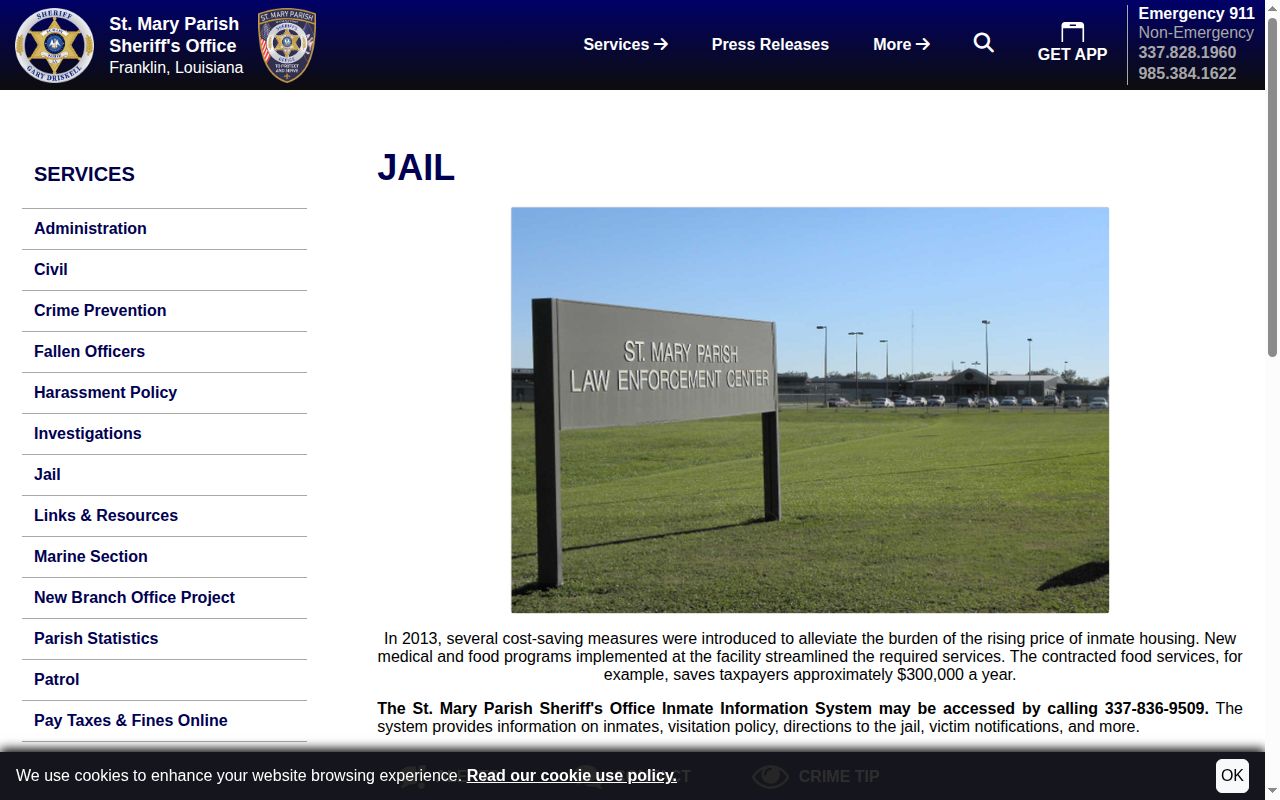
Use the agency named in the movement record as the next lookup point. If the record says DPS&C, use the state route. If it names another parish, city, tribal, federal, or immigration authority, confirm with that receiving custodian.
Louisiana’s victim-notification channels also require care. LAVNS through VINELink can provide person-specific custody information and participating alerts. DPS&C states that its Victim Outreach registration is separate and is the route for actual or projected state-prison release notices. Enrollment in one does not automatically enroll someone in the other.
Transitional Program Release Dates
A participant’s expected date must come from the legal custodian’s time computation, not from the work-program label. For a locally sentenced parish prisoner, the starting points are the imposed term, prior-custody credit, concurrent or consecutive structure, and the parish good-time rule that applies. R.S. 15:571.3 gives the sheriff authority over earned parish credit. Eligible parish prisoners sentenced without hard labor may fall under one rate, while a first crime-of-violence conviction uses the separate three-days-for-seventeen structure and specified repeat violent offenders are excluded.
State prisoners follow the DPS&C provisions and any later governing statute. The often repeated 85 percent figure comes from serving 17 days in a 20-day cycle under one violent-offense rate. It does not apply to every person. Earned credit, lost or restored credit, a new sentence, a warrant, a detainer, or a court or Board order can change the projected date. Parole eligibility also does not guarantee release.
Ask 225-383-4580 for a DPS&C projected release date when applicable. For a parish sentence, call the jail and request the official computation or existing release-date record. Once the person has left, the actual sheriff timestamp is retrospective proof of departure. It should replace an old projection when describing the event, while the state or supervision record explains any obligation that remains.
Note: A projected date forecasts a possible event; only the final custody record can show the actual release or transfer time.
Transitional Release Program Contacts
The research does not establish a separate public street address or direct line for the program. Use the Law Enforcement Center information line for current directions, program-status routing, and release questions. Send written custody-record requests to the sheriff’s published records address. This avoids assigning an unsupported address or office schedule to the program itself.
St. Mary Parish Transitional Work ProgramAssociated with the Law Enforcement Center
Centerville, Louisiana
Jail information: 337-836-9509 St. Mary Parish Sheriff’s Office, ATTN: Records
P.O. Box 571
Franklin, LA 70538
337-828-1960 or 985-384-1622
Monday through Friday, 8:30 a.m. to 4:30 p.m.
The official sheriff contact page should be checked for current telephone and office details.
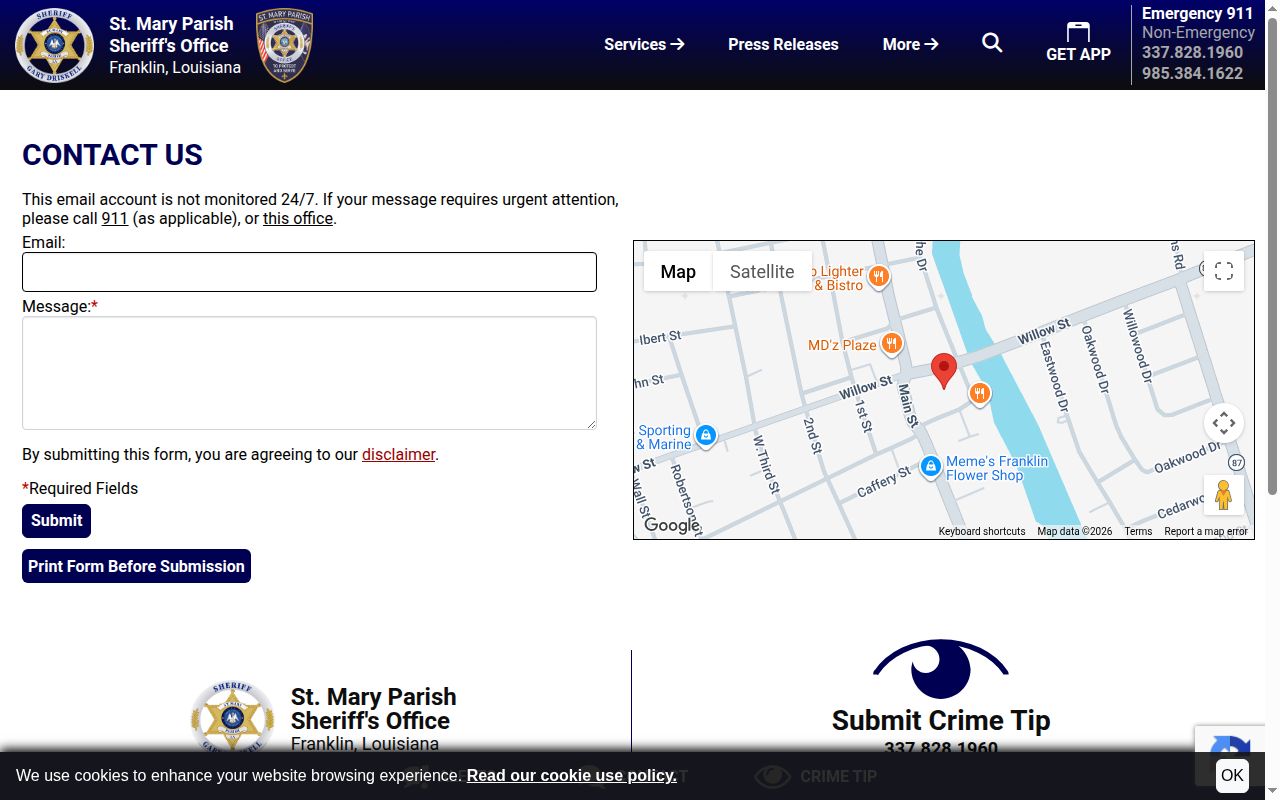
Call before travel. No fixed release hour, exit location, waiting area, transportation service, or property-pickup timetable was verified in the official sources.
Note: A program participant may be nearing community return while still serving a sentence, so use exact agency language when describing status.