
St. Mary Parole and Probation
A St. Mary Parish release can lead to several legal statuses. Parole is conditional community custody granted by the Louisiana Board of Pardons, Committee on Parole, before the sentence has fully ended. Probation comes from a court judgment and may follow a short jail term or replace part of a custodial term. Louisiana good-time law can also place a person under parole-like supervision for the balance of a sentence. Discharge is different. It means the recorded custody or supervision duty has ended, subject to the exact terms in the official record.
The St. Mary Parish Sheriff’s released view records departure from the Law Enforcement Center. It does not decide whether parole or probation exists. A release timestamp also does not show that a sentence is complete. The state record and sentencing judgment must be read with the jail entry. Charges on a booking card are allegations, and a probation-violation or parole-violation charge is not a final revocation decision.
| Status | Who creates it | Best verification |
|---|---|---|
| Parole | Committee on Parole decision | Decision, Louisiana DPS&C status, and assigned district |
| Probation | Sentencing court | Judgment or minutes and Probation and Parole district |
| Good-time supervision | State law and official time computation | Louisiana DPS&C computation and district assignment |
| Discharge | Legal custodian after all duties end | Final discharge record plus the court record when needed |
These labels should not be merged. A parole grant can precede actual release because an approved plan, a detainer, another hold, or processing may remain. Likewise, probation can start while a case is still active in the court system.
Verify St. Mary Post-Release Supervision
Begin with the legal custodian, not a current jail roster. The Louisiana Department of Public Safety and Corrections, Corrections Services controls state prisoner and state supervision data. The Division of Probation and Parole is the authoritative supervision agency. For court probation, the sentencing judgment remains essential because it states what the judge ordered.
- Collect the exact name, date of birth when lawfully available, DPS&C number, and St. Mary booking or court docket number.
- Use the Louisiana DPS&C Imprisoned Person Locator or call 225-383-4580. Ask for public status and the assigned district, if one appears.
- For probation, obtain the judgment or docket history from the St. Mary Parish court. A sheriff release card cannot establish the court’s supervision terms.
- For parole, match the person to the Committee on Parole docket and read the actual result. A scheduled hearing does not prove a grant.
- Contact the New Iberia District and ask how the public supervision status may be confirmed. Staff may withhold case-management detail that is not public.
- If sources conflict, request the release, time-computation, decision, or discharge record from the agency that created it.
The official Probation and Parole directory supplies the current office route. This matters because districts and staff can change. A no-result should be described narrowly. It does not prove that supervision ended, just as absence from the current St. Mary jail roster does not prove release.
LAVNS and VINELink can help track participating custody events, but they are not open probation databases. A custody-change alert does not establish the terms or end date of post-release supervision. For a state case, rely on Louisiana DPS&C and the assigned district. For court probation, use the judgment and court docket. When an alert and an agency record differ, ask the agency that created the supervision record to explain the public status and its correction process.
The screenshot below comes from the Louisiana DPS&C Probation and Parole lookup route.
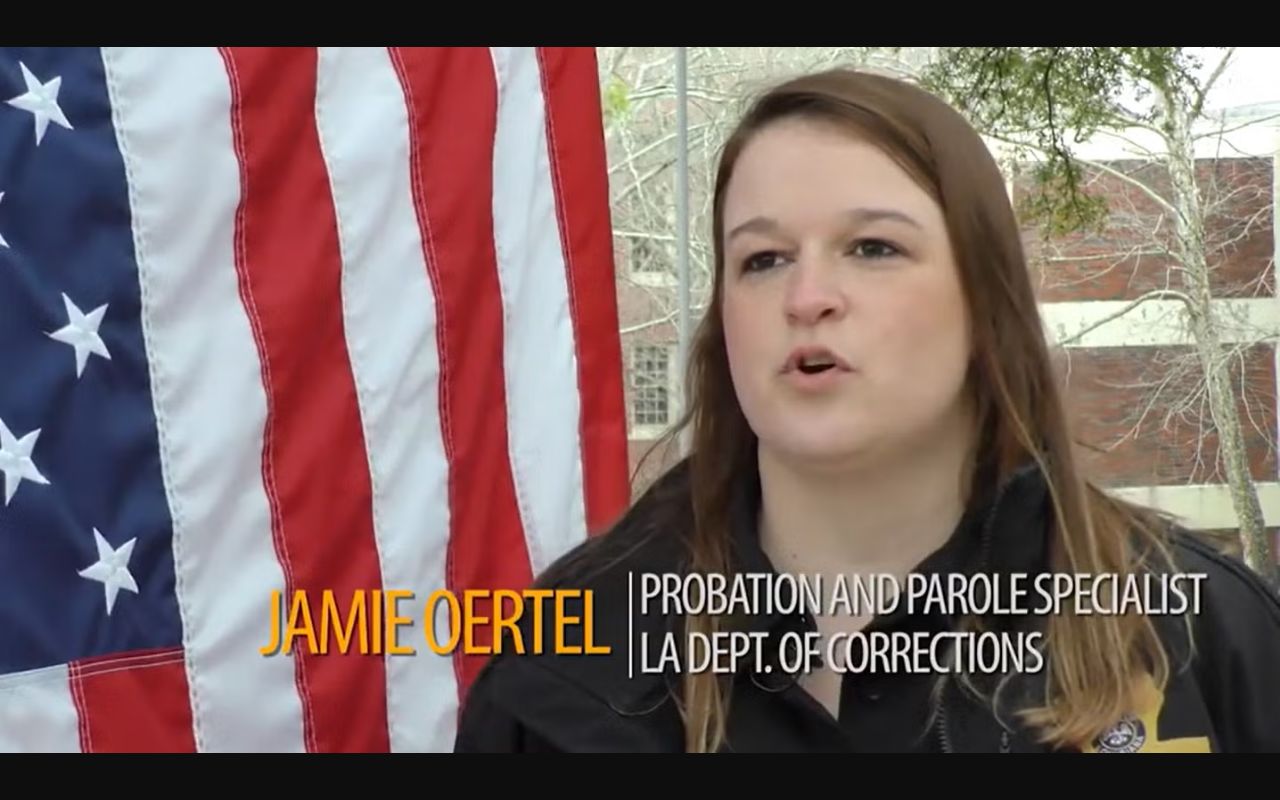
That agency route identifies the system responsible for state supervision rather than treating a parish jail card as a supervision record.
Note: Ask for public status and office routing, not protected notes about a person’s supervision plan.
St. Mary Supervision in New Iberia
The current supervising office for St. Mary Parish is the New Iberia District Probation and Parole Office. Its official page says the district serves Iberia, St. Martin, and St. Mary parishes and handles probation, parole, and good-time-parole cases. The district can explain its public verification process and whether a Louisiana DPS&C record assigns a person there. Office managers and caseload figures are time-sensitive, so the live directory should control.
New Iberia District Probation and Parole Office1221 Adrian Street
New Iberia, LA 70560
Phone: 337-373-0014
Fax: 337-373-0109
Monday through Friday, 8:00 a.m. to 4:30 p.m.
A physical release from St. Mary Parish does not itself create a New Iberia assignment. First confirm that Louisiana DPS&C or the sentencing court placed the person under state supervision. Then use the office for district-level confirmation. The New Iberia District page is the source for current contact details.
The office image below is linked from the same official New Iberia District source.
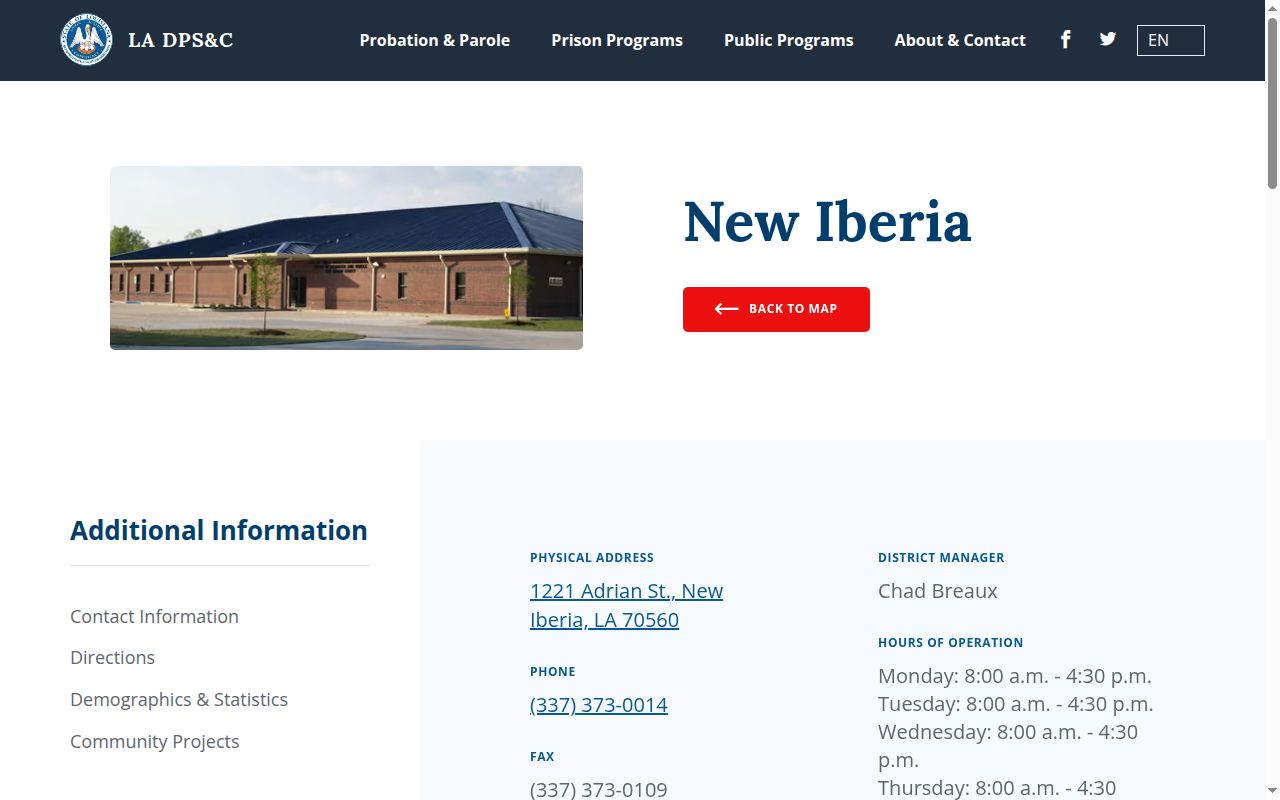
It anchors St. Mary Parish supervision inquiries to the correct regional office rather than an unverified local database.
St. Mary Parole Decision Records
The Louisiana Board of Pardons, Committee on Parole holds parole hearings. Its annual calendar shows a broad facility and parish-level cadence, while the individual docket identifies a scheduled case. A result document records the panel’s action. Each document answers a different question. The calendar does not prove that a named person was heard, and the docket does not prove that parole was granted.
Check the current annual hearing schedule, then the weekly parole docket. Match the DPS&C number, facility, and hearing date. Outcomes can include granted, denied, deferred, or later action involving a rehearing or rescission. Read the decision itself. Even a grant may be followed by conditions, plan approval, another hold, or release processing.
Louisiana R.S. 15:574.4 is the central eligibility law. Eligibility depends on the sentence, offense date, offense class, habitual-offender status, age, and other statutory factors. A generic percentage cannot establish a person’s eligibility or release date.
St. Mary Supervision Warrants
An absconder is a supervised person alleged to have stopped reporting or whose location is unknown. The label does not mean supervision ended. A warrant or retainer can lead to arrest and a revocation process. Revocation is the formal decision on whether supervision should be withdrawn after an alleged violation. A booking entry for a violation only records the charge or hold present at booking.
Use official DPS&C or warrant information and then check the Board or court outcome. Louisiana publishes parole revocation schedules and results. Those records may show that a person who had been released faced return-to-custody proceedings, but the current locator controls present status. For probation, use the sentencing court’s minutes or judgment along with the district office.
Conditions are rules attached to community supervision. They can include reporting and other case-specific duties, but public sources may not reveal every detail. A request should stay focused on public status, the assigned district, the governing decision, and the correction path for an inaccurate entry.
Note: A violation allegation, warrant, hearing, and final revocation are separate events and should be reported separately.
St. Mary Transitional Work Status
The St. Mary Parish Sheriff documents a Transitional Work Program at the Law Enforcement Center. Placement in that program is a custody or program stage. It is not proof that the person’s sentence has discharged, and it should not be labeled as final release. Participants may remain under the legal control of the sheriff or Louisiana DPS&C while moving through a structured transition.
Confirm the legal custodian first. For a locally sentenced person, ask the sheriff for the final physical release record. For a Louisiana DPS&C prisoner, use the state locator, official time computation, and any assigned Probation and Parole district. The Sheriff’s jail page supports the program’s existence but does not turn program placement into a release event.
This distinction is especially important at the mixed-population St. Mary Parish Law Enforcement Center. People housed in the same building can have different legal custodians. A move into transitional work, a transfer to another state facility, community release, and complete discharge produce different records.
St. Mary Supervision Discharge
Supervision ends through an official discharge, expiration, court action, or other lawful agency record. The exact route depends on whether the person is on parole, probation, or good-time supervision. Physical release from the parish jail is only the first event. End of supervision is a later event, and full-term discharge may be later still.
- Physical release
- The person leaves a jail or prison, possibly under continuing supervision.
- Parole
- Conditional community custody during the remaining sentence.
- Probation
- Court-ordered community supervision, distinct from parole.
- Revocation
- An official withdrawal of community supervision after the required process.
- Discharge
- The recorded end of the custody or supervision obligation.
Public-facing systems may emphasize current status and may not promise a permanent web history for every fully discharged person. When a final answer matters, request the historical supervision or discharge record and reconcile it with the sentencing court. The St. Mary Parish released-inmate search path explains how the jail timestamp, court authority, and state record fit together.